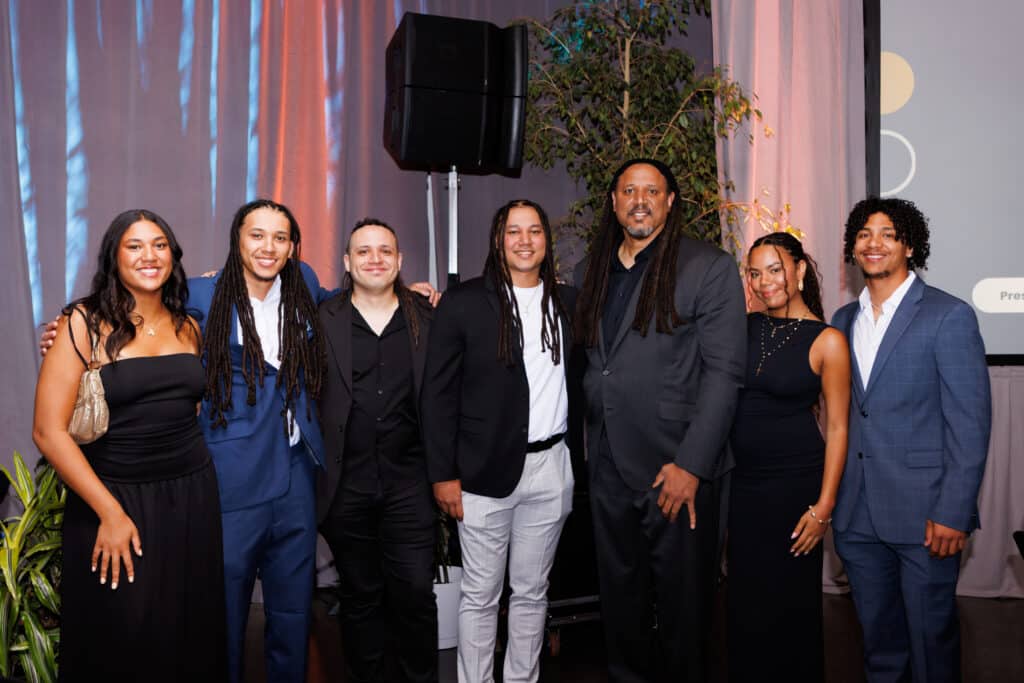
At the Brian Grant Foundation, we believe in amplifying the voices of community leaders to help shape how we support and connect to people living with Parkinson’s. One of those leaders is Amy Lavallee, our esteemed community liaison, whose personal journey and dedication to advocacy perfectly exemplify the courage, resilience, and humility characteristic of the Parkinson’s community. You already know her from our webcasts and community events, but you may not know her story.
Amy’s Parkinson’s journey began nearly a decade ago when she was diagnosed with young-onset Parkinson’s disease (YOPD) at 34. She noticed early symptoms while pregnant with her third child, but the diagnosis came as a shock. Like many young people with Parkinson’s, Amy sought support groups and resources that reflected her reality as a parent juggling family duties and profound life changes. That uncertainty underscores how little is understood about Parkinson’s in younger populations, a gap that has shaped much of her work in this field.
Despite the early challenges, Amy turned her experience into action. She became a volunteer and advocate within the Parkinson’s community and joined the Brian Grant Foundation three years ago. At BGF, she connects people living with Parkinson’s and brings our programs to those who need them most, fostering support, camaraderie, and empowerment through shared experience.
At home, Amy continues to be a devoted wife and mother, roles that ground her and motivate her every day. Navigating Parkinson’s while raising a family has reshaped her perspective, but it has also strengthened her resolve to live fully and stay connected.
You can meet Amy in person at two upcoming events: BGF’s annual gala on April 24 and at our table at the World Parkinson Congress, May 24–27. She’s eager to connect with other members of the Parkinson’s community, share her story, and engage with others who are walking a similar path. We hope you’ll stop by to say hello and learn more about this wonderful woman and the work she’s so passionate about!
March 30, 2026
The word “awareness” in the context of a disease usually appears as a month on the calendar or support campaign, but for progressive conditions like Parkinson’s, it’s much more. It’s often the first step toward meaningful change.
For those living with Parkinson’s disease, and the families and care partners who support them, awareness can open doors. It reduces stigma, inspires research funding, helps people recognize symptoms earlier, and builds stronger communities. Most importantly, it ensures that people impacted by Parkinson’s are seen, heard, and understood.
Across the world, advocacy and education have played a critical role in improving how we talk about Parkinson’s.
Why Awareness Matters Parkinson’s disease is largely misunderstood by the general public. Many people associate it with tremors and paralysis, but it often produces symptoms that affect mood, sleep, cognition, and daily functioning in surprising ways. Education helps people learn what Parkinson’s really looks like, which is very important for identifying the disease in its earliest stages when medication is most effective.
Awareness also strengthens advocacy efforts in those who don’t have the disease. When more people understand the impact of Parkinson’s, they are more likely to support research initiatives, community programs, and policy changes that improve care. As awareness grows, so does connection. Many people living with Parkinson’s discover that community is one of the most powerful tools for living well with the disease. Sharing their experiences with others reduces isolation and helps them feel supported as they navigate their journey.
What Awareness Has Accomplished for Parkinson’s Over the past few decades, Parkinson’s awareness has expanded significantly. Advocacy organizations, researchers, and people living with PD have helped bring the disease into public conversation in ways that were far less common in the past. Events like Parkinson’s Awareness Month (April) and World Parkinson’s Day (April 11) bring communities together from all around the globe. These efforts encourage people to learn more about the disease and stand in solidarity with those affected.
Advocacy also influences research and policymaking. Parkinson’s is now recognized as the fastest growing neurological condition in the world, sparking increased urgency around funding for treatment and care. Organizations like the Brian Grant Foundation work alongside national partners and advocacy groups to help advance these efforts.
Lessons from Other Advocacy Movements
To learn more the importance of Parkinson’s awareness and what achievements are possible, we can look to other highly successful public health campaigns for inspiration.
The global response to HIV/AIDS is a powerful example. Early in the AIDS epidemic, stigma and misinformation were widespread. Treatment options were extremely limited. It was a mysterious and terrifying diagnosis. Persistent advocacy from patients, scientists, and community organizations helped shift public perception, leading to an acceleration in the research that discovered life-saving treatments. Now, HIV positive people live relatively normal lives and can expect to survive well into their golden years with consistent treatment. They also face significantly less judgement from peers and have the requisite social support that everyone living with a chronic condition deserves.
Breast cancer awareness campaigns also demonstrate the power of sustained public health advocacy. Decades ago, breast cancer was often diagnosed late, and many women were reluctant to discuss the disease openly. Patient advocates and nonprofit organizations helped bring breast cancer into the public conversation, encouraging routine screening, increased research funding, and expanded patient support networks. As a result, early detection rates are much higher, and survival rates have risen dramatically. Today, many breast cancers can be treated successfully, and patients have access to a wide range of therapies and support services that were far less available in the past.
Both of these movements demonstrate how much education, advocacy, and community engagement can alter the trajectory of a disease and improve the lives of millions.
Moving Awareness Forward
The need for Parkinson’s awareness continues to grow. As populations age, the number of people living with Parkinson’s is expected to rise in the coming years. That reality makes continued education and community engagement more important than ever. Raising awareness can take many forms, and the following are good places to start:
Sharing educational resources
Participating in awareness events
Supporting Parkinson’s organizations
Advocating for research and policy change
Telling personal stories that help others understand the disease
History shows that when people come together to speak openly about a disease, meaningful change is possible. As the saying goes, “Be the change you want to see in the world.” Each of these actions helps brighten the future of the Parkinson’s community, reminding those living with PD that they are not in this alone and better days are coming.
It’s almost that time of year again! Join us for a night in celebration of the Brian Grant Foundation on Friday, April 24, 2026 by clicking here to learn more about our 16th annual fundraising gala and purchase your ticket.
We can’t wait to see you there!
Gait freezing and walking challenges are some of the most frustrating movement symptoms in Parkinson’s. Michael Braitsch, PT, DPT, a physical therapist specializing in Parkinson’s, explains why gait changes happen and shares practical tools and strategies to improve mobility.
About the Presenter
Dr. Mike Braitsch PT, DPT, is a physical therapist, owner of Tribe Wellness, and an Assistant Clinical Professor of Physical Therapy at Texas Woman’s University. With a passion for accessible movement and community-based care, Mike has been a longtime advocate for helping people with Parkinson’s stay active, connected, and empowered.
This webcast is brought you our platinum sponsor:
February 24, 2026
Muscle rigidity is a persistent motor symptom of Parkinson’s disease, and it’s influenced by multiple factors, including posture, stress, medication timing, and overall activity levels. It often manifests as stiffness in the neck, shoulders, back, arms, or legs, and can make ordinary movements feel slow and difficult. Rigidity may fluctuate throughout the day, but its interference with dressing, bathing, walking, and even resting makes it a significant challenge to overcome. While there are some great big-picture lifestyle changes like resistance training and high-intensity interval training (HIIT) that can make a big difference, it’s also important to incorporate consistent, gentle movements into daily routines to further reduce discomfort and improve mobility day-to-day.
Why Rigidity Happens Rigidity in Parkinson’s is caused by changes in how the brain regulates muscle tone. Instead of muscles relaxing fully between movements, they may remain partially contracted. This leads to reduced arm swing while walking, a sense of heaviness in the limbs, difficulty turning in bed, and movement restrictions.
Stiffness may become more noticeable during periods when medication is wearing off, during prolonged inactivity, or when anxiety is heightened. Recognizing patterns can help you better anticipate and manage symptoms.
Ways to Reduce Everyday Stiffness Understanding that rigidity responds well to frequent, moderate movement is key. The following strategies focus on maintaining mobility without overexertion. It’s always a good ideo consult your care team before making major changes to your routine, but these are great places to start.
Warming the muscles
Take a warm shower before starting your day
Apply a heating pad to tight areas
Start activities with light walking rather than static stretching while muscles are “cold”
Mobility practice
Begin with relaxed breathing to release shoulder and jaw tension
Gently roll shoulders forward and backward
Rotate the trunk slowly while seated or standing
Shift weight side to side to encourage hip mobility
Take a brief walk using longer steps and upright posture
Mind-muscle connection
Visualize the movement you’re performing
Think about lifting the chest rather than pulling the shoulders back
Keep your chin level and gaze forward
Allow arms to swing naturally when walking
Modifying Daily Tasks to Accommodate Rigidity
Incorporating occupational therapy principles into your daily routine is a good complement to mobility exercises. They emphasize working with your body rather than pushing against it. These small adjustments conserve energy and reduce frustration, which will in turn help ease some of the challenges of rigidity.
Dressing
Choose clothing with elastic waistbands or simplified fasteners to reduce the amount of fine motor skill needed to get dressed.
Lay clothing out in the order it will be put on
Try getting dressed while seated to reduce balance demands
Bathing
Install grab bars and non-slip mats into the shower or tub
Use a shower chair if standing feels tiring or balance is difficult
Keep toiletries within easy reach
Kitchen and household tasks
Use lightweight cookware to reduce the fatigue of lifting and moving pots and pans
Slide items across counters instead of lifting them (if possible)
Work in short intervals rather than completing tasks all at once
Rigidity is rarely resolved by a single technique. It responds best to repetition, awareness, and thoughtful pacing. Don’t forget to lean on your support system for assistance in implementing these changes and staying on track. Perhaps the most important piece of advice anyone can offer is to ask for help when you need it. Having difficulty with daily tasks can be embarrassing and hard to admit, but being honest with loved ones and taking the time you need to perform movements will always lead to better outcomes.
February 24, 2026
Gait freezing is one of the more complicated and frustrating symptoms associated with Parkinson’s disease (PD). It is defined as sudden, temporary inability to take a step. While brief, these episodes can feel overwhelming and may increase the risk of falls.
Why Gait Freezing Happens Though freezing is often unpredictable, it tends to occur more frequently in specific situations and often has several contributing factors:
Cognitive challenges Planning and coordinating movement, especially when navigating turns, doorways, and uneven ground, can trigger freezing, as well as starting or stopping, moving through small or cluttered spaces, and walking on slippery surfaces.
Multitasking Walking while reaching for something or performing another task.
Emotional triggers Anxiety, excitement, frustration, uncertainty about where to go, and feeling rushed or pressured.
Medication timing and dosage When you take your medication can influence when freezing is more likely to occur.
Practical Tips to Move Better During a Freezing Episode Understanding freezing triggers is the first step toward managing them. The strategies below were developed in partnership with Parkinson’s experts and reflect the techniques clinicians commonly teach their patients to help them move more safely. Always consult your physician or care team before making major changes to your routine, but the following are great places to start:
Visual Strategies Visual cues can help “reset” movement patterns, so find a way to anchor yourself to your environment and shift attention away from the sensation of being stuck.
Focus on a companion walking beside you
Look through doorways rather than at them
Keep your gaze straight ahead instead of looking down
Choose a target in the distance and walk toward it
Place a visible mark on the floor and step over it
Mental Strategies Freezing often worsens when someone feels hurried. Slowing down and mentally rehearsing movement can improve physical control.
Pause to reduce the sense of urgency
Visualize movements such as kicking a ball, climbing stairs, or dancing
Count aloud to create a steady rhythm
Movement-Based Techniques Altering how you initiate movement can help break a freeze by creating a deliberate motor sequence that helps initiate forward motion.
When turning:
Walk in a wide circle instead of pivoting in place
Practice stepping over a companion’s foot or a visible spot on the floor
To start walking:
If you use a cane, tap it on the ground to establish rhythm
Step sideways or backward before stepping forward
Lean slightly forward to shift your weight
Auditory and Tactile Cues External sensory input can serve as a powerful trigger for movement.
Have a companion gently touch your arm or elbow
Walk arm in arm with someone
Use verbal cues such as “walk” or “march”
Listen to rhythmic music you enjoy
Medication Timing Medication management plays an important role in freezing (as well as many other symptoms). Tracking which times of day certain symptoms are most noticeable can help your care team fine-tune your treatment.
Use reminders to take medications at consistent times
Keep a diary of freezing episodes to identify patterns
When possible, plan activities during “On” periods when medication is working optimally
Making the Most of Your Strategies
Gait freezing is complex because it involves motor planning, attention, environment, emotional state, and medication effects. There is rarely a single solution for reducing episodes. Instead, you’re most likely to benefit from a combination of strategies. Take some time to identify which approaches are most helpful and in which situations they are effective, and try not to get discouraged, as this may be a longer process than expected. With preparation, awareness, and good technique, many people with Parkinson’s can improve their ability to move through freezing episodes and reclaim a stronger sense of independence.
Swallowing and speech challenges are common symptoms of Parkinson’s. Join us for a conversation with a speech-language pathologist specializing in Parkinson’s care to learn why these issues occur and what practical strategies can make a difference.
About the Presenter
Julia Robinson (MS, CCC, SLP) is a speech-language pathologist with 25 years of experience who values evidence-based practice. She is part of the outpatient neurological team at Legacy Emanuel Center, specializing in dysphagia, voice, aphasia, and cognitive-linguistic disorders. She is a member of the Brian Grant Foundation Medical Advisory Council for Parkinson’s disease, teaches the weekly Parkinson’s Communication Skills Class (a collaboration of Parkinson’s Resources of Oregon and Legacy Emanuel), and is certified in LSVT ® LOUD voice-therapy treatment for Parkinson’s disease. She also facilitates the monthly, community head-and-neck cancer support group.
This webcast is brought you our platinum sponsor:
Creating a Legacy of Hope and Support
At the Brian Grant Foundation (BGF), our mission is to empower people impacted by Parkinson’s to lead active, fulfilling lives. By including BGF in your estate plans, you extend that mission into the future, ensuring that individuals and families living with Parkinson’s will continue to find education, resources, and community support for years to come.
Planned giving is one of the most meaningful ways to create a lasting legacy.
Ways to Leave Your Legacy
Bequests (Wills & Trusts): Designate a specific amount, a percentage, or the remainder of your estate to BGF. This flexible and straightforward option makes a lasting difference.
Beneficiary Designations: Name BGF as a beneficiary of your retirement account, life insurance policy, or bank account. It’s a simple step with a powerful impact.
Qualified Charitable Distributions (QCDs): If you’re 70½ or older, you can give up to $100,000 annually from your IRA directly to BGF. QCDs can count toward required minimum distributions and may lower taxable income.
Gifts of Securities or Appreciated Assets: By donating long-term appreciated stocks, bonds, or mutual funds, you avoid capital gains tax and receive a charitable deduction.
Gifts of Real Estate or Property: You may choose to give real estate or other property, either outright or through a retained life interest (subject to BGF acceptance policies).
Charitable Remainder Trusts (CRTs): Establish a trust that provides you or your loved ones with income for life or a term of years, with the remainder supporting BGF’s work.
Life Insurance Gifts: Name BGF as a beneficiary of an existing or new life insurance policy. Premium payments may qualify as tax-deductible contributions.
Donor-Advised Funds (DAFs): If you have a DAF, you can recommend a grant to BGF at any time.
Why Your Legacy Matters
Your planned gift is more than a donation; it’s a promise to future generations. It ensures that:
People with Parkinson’s live empowered lives.
Families and caregivers receive education, resources, and hope.
Programs remain strong, accessible, and sustainable.
Sample Bequest Language
“I give, devise, and bequeath to the Brian Grant Foundation, a nonprofit corporation with principal office in [City, State] (EIN: ________________), (a) __% of my residuary estate; or (b) the sum of $__; or (c) the remainder of my estate, for its general purposes (or for purposes designated).”
Recognition Through the Legacy Circle
We are deeply grateful for the generous supporters who include BGF in their estate plans. Through our Legacy Circle, you may receive:
A welcome letter and certificate of appreciation
Recognition in our annual report and website (if you wish)
Invitations to exclusive events and briefings
Impact updates about how your gift is making a difference
If you prefer, you can remain completely anonymous. We honor every donor’s wishes with the utmost respect and confidentiality.
How to Begin
Consult your advisors. Review options with your attorney or financial planner.
Use our sample language. Adapt it to fit your wishes.
Let us know. While not required, notifying us helps us steward your legacy thoughtfully.
Stay connected. As part of our Legacy Circle, you’ll be welcomed into the BGF community with ongoing updates and gratitude.
Important Note
This information is provided as a guide and should not replace advice from your legal, tax, or financial advisors.
Together, we can ensure that no one faces Parkinson’s alone, now and for generations to come.
Brian Grant Foundation Tax Information: Legal Name: Brian Grant Foundation Address: 650 NE Holladay Street #1600, Portland, OR 97232 Tax ID: 27-1628944
Brian Grant Foundation is a registered 501(c)(3) nonprofit.
If you have any questions, please contact us at (503) 274-9382.
February 03, 2026
Speech changes in Parkinson’s often happen gradually. Many people don’t realize their voice has changed until someone else points it out or they have trouble projecting in everyday situations like phone calls, drive-thrus, work situations, and group conversations. Common speech-related challenges can include:
Low volume or a softer voice
Struggling to be heard in noisy environments
Slurred or unclear speech
Cognitive strain when multitasking
Fatigue, frustration, or self-consciousness while speaking
Speech changes aren’t just physical. They can also affect identity, relationships, and participation in everyday life. Avoiding conversations, staying quiet in group settings, or seeking calmer environments because speaking in socially competitive spaces feels exhausting can lead to reduced connection with others and increased isolation.
How Swallowing Changes Affect Speech For some, speech issues overlap with physical symptoms like saliva management and swallowing difficulties (dysphagia), creating an additional barrier to speaking comfortably. Swallowing changes can happen slowly over time, and the signs and symptoms may look different from person to person, but the following are common:
Muscle stiffness or slowness affecting swallowing
Reduced coordination between breathing and swallowing
Dry mouth or low saliva
Cognitive changes that interfere with swallowing
Posture challenges that increase aspiration risk
Even when swallowing changes don’t seem directly connected to speech, they can still influence it. Frequent throat clearing, coughing, and unpleasant throat sensations can interrupt the flow of conversation and make speaking more difficult. Some in the Parkinson’s community need to address saliva or swallowing issues before they can even attempt to speak clearly. Reduced coordination between breathing and swallowing affects timing and breath control, which both play an important role in speaking with strength and clarity.
Strategies That Can Help The most effective approach to improving speech and swallowing is a combination of professional support and consistent habits that strengthen voice, reduce strain, and make communication easier. Try the following:
Work with a speech-language pathologist early and consistently Building good habits as soon as you notice issues will set you up for success and potentially slow the decline.
Participate in speech therapy programs Evidence-based programs such as LSVT LOUD support vocal strength and clarity to improve and preserve speech.
Practice, practice, practice Daily voice exercises like vocal warmups, reading aloud, and singing help maintain muscle control and strength, and adding in breathing exercises can further encourage projection.
Eat and Drink Safely To help reduce swallowing strain, sit upright during meals, choose softer foods, eat slowly, and limit distractions so you can focus on chewing and swallowing efficiently. To learn more, check out this article on how to eat well when swallowing is hard.
Speech and swallowing changes in Parkinson’s can be challenging, but they don’t have to mean avoiding conversation or withdrawing from social events. With the right support, early intervention, and consistent practice, improvement and preservation are possible. If you’re noticing changes in speech or swallowing, speak with your care team about putting together an action plan to keep your voice strong.
To learn more about how to improve speech and swallowing with Parkinson’s, register for our upcoming webcast with Julia Robinson, a licensed speech-language pathologist with 25 years of experience!